


The Status of Artists in Tunisia
Human Rights, Cultural Rights and Artists’ Rights
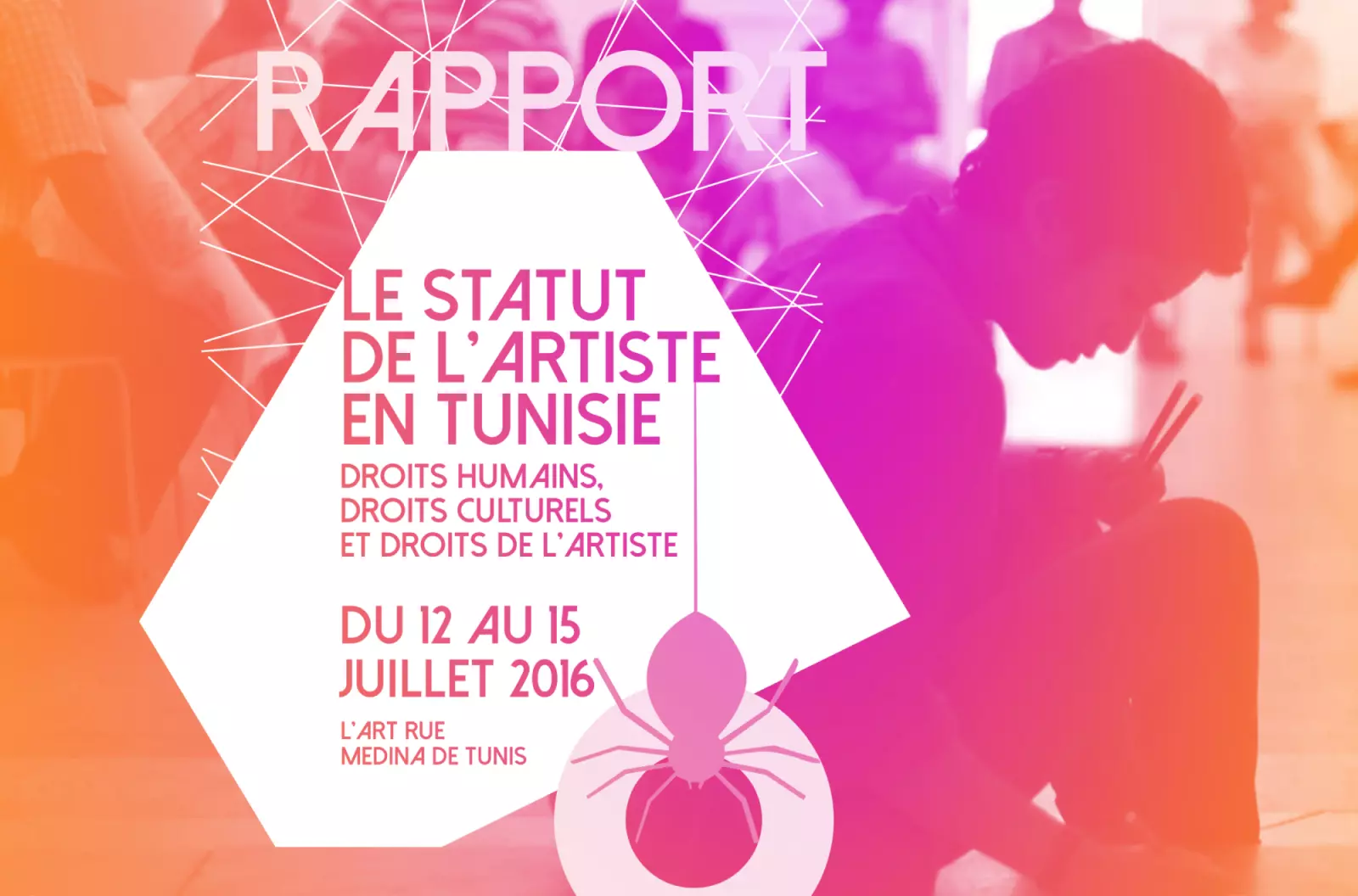
Training organized by L’Art Rue (12–15 July 2016) — A space for exchange and action to strengthen artists’ rights and status in Tunisia.
Organized by the association L’Art Rue and supported by Artwatch Africa, a flagship programme of Arterial Network defending artists’ rights across Africa, this interactive training brought together artists, journalists, activists, cultural professionals and institutional representatives with a shared goal: to clarify artists’ rights and the scope of creative freedom in Tunisia.
Artwatch Africa backs field initiatives that promote artists’ professional empowerment and legal protection; its support made it possible to design a programme combining legal input, lived experience and hands‑on workshops. Rather than offering fixed answers, the training favored a participatory approach — case studies, role‑plays and a roundtable with experts and ministry representatives — to develop practical tools, produce concrete recommendations and establish a lasting dialogue between civil society and the authorities responsible for cultural policy.
Objectives
- Introduce participants to key concepts: human rights, vulnerability, cultural rights and the legal status of artists.
- Open a multi‑stakeholder dialogue (artists, civil society, state) to develop concrete proposals on artists’ status.
Programme and methodology
Four days structured into three parts:
Part 1 — Core concepts: human rights, vulnerability, development and the role of the artist.
Part 2 — Roundtable: discussions with specialists (lawyer, ministry representatives, programme coordinator) on regulation, international conventions and cultural policy.
Part 3 — Practical workshops: eight thematic workshops (social and legal promotion, freedom of creation, production/distribution, funding, training, public space, etc.) and case studies.
Method: participatory workshops, role‑playing, experience sharing and meetings with decision‑makers.
Participant profile
A diverse group: professional and self‑taught artists (visual arts, music, theatre, dance, etc.), activists, cultural journalists and bloggers, cultural centre managers, staff and members of artistic organisations, and representatives from the Ministry of Cultural Affairs. This diversity enriched the debates and grounded the recommendations in varied realities.
Highlights and outcomes
- Greater awareness of human rights as they apply to artists and of artists’ vulnerabilities (social coverage, legal status, access to resources).
- Constructive dialogue with the ministry on a draft artists’ status (broad definition of cultural professions, social protection, sectoral representation).
- Practical recommendations from the eight workshops (social and legal promotion, freedom of creation, entrepreneurship, training, public spaces, etc.).
- Highly appreciated methodology: participatory, experience‑based and group‑focused.
Main recommendations
- Adopt a specific legal status for artists that includes social protection and professional recognition.
- Establish sectoral representation mechanisms to enable dialogue with public authorities.
- Simplify access to the profession and reform procedures for issuing professional artist cards.
- Strengthen training, access to practice spaces and financial and entrepreneurial support for the cultural sector.
Speakers and partners
- Organizer: L’Art Rue
- Framework programme: Artwatch Africa / Arterial Network
- Institutional partners: Ministry of Cultural Affairs (including ministry staff and advisors)